Beneath the world’s oceans lie the remnants of once-thriving civilizations, offering archaeologists unprecedented glimpses into humanity’s mysterious past through submerged archaeological sites.
🌊 The Allure of Underwater Archaeological Discovery
The ocean floor harbors secrets that have captivated explorers, historians, and archaeologists for generations. Sunken cities represent more than just ruins beneath the waves—they are time capsules preserving ancient cultures, technologies, and ways of life that would otherwise be lost to history. These submerged archaeological sites offer unique preservation conditions, where artifacts remain protected from the oxidation and degradation that affects terrestrial sites.
Modern underwater archaeology has revolutionized our understanding of ancient civilizations. Advanced diving technology, remotely operated vehicles (ROVs), and sophisticated mapping systems now allow researchers to explore depths previously inaccessible to human investigation. These technological advances have unveiled entire cities that challenge established historical narratives and force us to reconsider what we thought we knew about our ancestors.
Heracleion: Egypt’s Lost Port City Emerges from Darkness
One of the most spectacular underwater archaeological discoveries of recent decades is Heracleion, also known as Thonis, located in Abu Qir Bay near Alexandria, Egypt. This legendary city, mentioned by ancient historians including Herodotus, vanished beneath the Mediterranean Sea approximately 1,200 years ago. For centuries, scholars debated whether Heracleion was merely mythological or an actual historical location.
French archaeologist Franck Goddio and his team finally located the city in 2000, buried under sand and mud at a depth of approximately 30 feet. The discovery revealed an astonishingly well-preserved urban landscape, complete with colossal statues, temple remains, shipwrecks, gold coins, and intricate jewelry. The city served as Egypt’s main port of entry before Alexander the Great founded Alexandria in 331 BCE.
Treasures Retrieved from Heracleion’s Depths
Archaeological excavations at Heracleion have yielded remarkable artifacts that illuminate ancient Egyptian religious practices and international trade relationships. Divers have recovered massive stone sculptures of pharaohs and gods, some weighing several tons, which once adorned the city’s grand temple dedicated to Amun-Gereb. The discovery of Greek and Egyptian artifacts together demonstrates the cultural fusion that characterized this cosmopolitan port city.
The preservation conditions beneath the Mediterranean have protected organic materials that rarely survive in terrestrial excavations. Researchers have found ancient wooden ship structures, leather goods, and even food offerings placed in temples thousands of years ago. These finds provide invaluable insights into daily life, religious ceremonies, and maritime technology during Egypt’s Late Period.
Pavlopetri: The World’s Oldest Submerged Town
Off the coast of southern Laconia in Greece lies Pavlopetri, recognized as the oldest known submerged city in the world. Dating back approximately 5,000 years to the Early Bronze Age, this settlement predates the famous ruins of ancient Athens and offers archaeologists a unique window into prehistoric Aegean civilization.
First discovered in 1967 by oceanographer Dr. Nicholas Flemming, Pavlopetri remained relatively unexplored until a comprehensive survey conducted by the University of Nottingham and the Hellenic Centre for Marine Research between 2009 and 2011. The survey utilized cutting-edge technology including underwater robots and sophisticated sonar mapping to create detailed three-dimensional reconstructions of the ancient town.
Urban Planning in the Bronze Age
The layout of Pavlopetri reveals surprisingly advanced urban planning for its era. The submerged remains include streets, buildings, courtyards, tombs, and what appears to be a sophisticated water management system. At least 15 separate buildings have been identified, along with a town square that likely served as a marketplace and social gathering center.
Artifacts recovered from the site include pottery, obsidian tools, and millstones, suggesting Pavlopetri was a thriving commercial center engaged in trade across the Mediterranean. The city’s strategic coastal location would have made it ideal for maritime commerce, connecting mainland Greece with Crete and other Mediterranean civilizations.
🏛️ Dwarka: India’s Mythological City Made Real
The discovery of submerged structures off the coast of Gujarat, India, has sparked intense debate about the historical reality behind Hindu mythology. Ancient Sanskrit texts describe Dwarka as the magnificent capital city of Lord Krishna, a kingdom of great prosperity that supposedly sank into the sea after Krishna’s death.
Marine archaeological investigations conducted by the National Institute of Oceanography beginning in the 1980s have revealed extensive structural remains, including what appear to be fortification walls, a harbor, and various buildings submerged in the Gulf of Cambay. Artifacts recovered from the site, including pottery, sculptures, and inscriptions, have been dated to periods ranging from 1500 BCE to relatively recent historical times.
Controversial Findings and Ongoing Research
The Dwarka discoveries have generated significant controversy within the archaeological community. Some researchers argue that the submerged structures represent multiple historical settlements built over millennia, while others contend they provide evidence for the historicity of events described in epic texts like the Mahabharata. The complexity of underwater excavation and the challenges of accurate dating in marine environments complicate definitive conclusions.
Ongoing research continues to explore the site using advanced technologies including multi-beam bathymetry and sub-bottom profilers. These investigations aim to establish clearer chronologies and better understand the relationship between physical evidence and literary traditions that have shaped Indian cultural identity for thousands of years.
Port Royal: The “Wickedest City on Earth” Preserved in Time
In 1692, a catastrophic earthquake followed by a tsunami caused approximately two-thirds of Port Royal, Jamaica, to sink beneath the Caribbean Sea. Known as the “wickedest city on Earth” due to its reputation as a pirate haven, Port Royal was one of the Caribbean’s most prosperous and populous cities before disaster struck on June 7, 1692.
The sudden submersion created exceptional preservation conditions. Buildings collapsed quickly and were buried under sand and silt, protecting artifacts from oxygen exposure and creating what archaeologists describe as an unparalleled time capsule of 17th-century colonial life in the Americas.
Archaeological Significance of Rapid Submersion
Unlike sites that deteriorated gradually over centuries, Port Royal’s abrupt destruction means that buildings, possessions, and even food items were abandoned mid-use. Excavations have recovered everything from tavern equipment and merchant’s scales to musical instruments and medical supplies. A pocket watch stopped at the exact moment of the earthquake provides a haunting timestamp of the catastrophe.
The site has yielded information about colonial economics, social structures, and daily activities that written records alone could never provide. Archaeologists have identified distinct residential, commercial, and industrial areas, revealing the complex urban organization of this pivotal Caribbean port city.
🗺️ Technologies Revolutionizing Underwater Archaeology
Modern underwater archaeology bears little resemblance to the treasure-hunting expeditions of previous centuries. Today’s researchers employ sophisticated technologies that have transformed how we locate, document, and interpret submerged archaeological sites.
Remote Sensing and Mapping Technologies
Multibeam sonar systems create detailed bathymetric maps of the ocean floor, revealing topographical anomalies that may indicate human-made structures. Side-scan sonar produces photographic-quality images of submerged objects and landscapes, allowing archaeologists to conduct preliminary surveys without disturbing sites.
Magnetometers detect variations in magnetic fields caused by buried metal objects, helping locate shipwrecks and artifacts hidden beneath sediment. Sub-bottom profilers use sound waves to reveal structures buried beneath the seafloor, providing a three-dimensional understanding of site stratigraphy without excavation.
Diving Technology and Robotic Exploration
Advanced diving equipment, including rebreathers and mixed-gas systems, enables archaeologists to work at greater depths and for extended periods. However, many significant discoveries now occur far beyond safe diving depths, necessitating robotic exploration methods.
Remotely operated vehicles (ROVs) equipped with high-definition cameras, robotic arms, and sampling equipment can explore sites at depths exceeding 6,000 meters. Autonomous underwater vehicles (AUVs) conduct systematic surveys across vast areas, following pre-programmed routes to collect data without human piloting.
Challenges Facing Underwater Archaeological Preservation
Despite technological advances, underwater archaeology faces numerous challenges that threaten both research efforts and site preservation. Climate change, pollution, and human activities create urgent conservation concerns for submerged cultural heritage worldwide.
Environmental Threats to Submerged Sites
Rising ocean temperatures and increasing acidity affect marine ecosystems and chemical processes that have preserved underwater sites for centuries. Wooden shipwrecks face accelerated deterioration as changing ocean chemistry alters the balance of microorganisms that consume organic materials.
Coastal development, dredging operations, and bottom trawling fishing practices pose direct physical threats to underwater archaeological sites. Many significant discoveries have been damaged or destroyed before proper documentation could occur, representing irreplaceable losses to our collective cultural heritage.
Ethical and Legal Considerations
The legal status of underwater cultural heritage remains complex and often contentious. UNESCO’s 2001 Convention on the Protection of the Underwater Cultural Heritage established principles for ethical archaeological practice and site protection, but enforcement remains challenging in international waters and jurisdictions with limited resources.
Commercial salvage operations sometimes conflict with scientific archaeological methods, prioritizing artifact recovery over contextual documentation. Balancing public interest in accessing recovered treasures with preservation requirements and respecting cultural sensitivities creates ongoing ethical dilemmas for the archaeological community.
⚓ What Sunken Cities Teach Us About Climate and Catastrophe
Submerged archaeological sites provide critical data about historical climate change, sea-level variations, and catastrophic events that shaped human civilization. By studying why cities sank, researchers gain insights relevant to contemporary concerns about coastal vulnerability and environmental change.
Many ancient cities now underwater were originally built at or near sea level, then submerged due to rising waters, land subsidence, or tectonic activity. Analyzing sediment cores, dating methods, and archaeological evidence helps scientists reconstruct past environmental conditions and understand how ancient populations adapted to—or failed to survive—dramatic environmental changes.
Lessons for Modern Coastal Communities
The fate of cities like Heracleion, which likely sank due to a combination of sea-level rise and soil liquefaction during earthquakes, resonates with contemporary concerns facing coastal megacities. Understanding how ancient civilizations responded to environmental pressures informs modern approaches to climate adaptation and urban resilience.
Archaeological evidence suggests that some ancient societies successfully relocated or adapted infrastructure in response to changing conditions, while others collapsed when environmental changes exceeded their adaptive capacity. These historical precedents offer valuable perspectives as modern societies confront accelerating climate change and rising sea levels threatening coastal populations worldwide.
The Future of Underwater Archaeological Discovery
As technology continues advancing, the pace of underwater archaeological discovery accelerates. Artificial intelligence and machine learning now assist in analyzing vast datasets collected by underwater surveys, identifying patterns and anomalies that might indicate archaeological significance.
Satellite remote sensing technologies can detect subtle variations in water color and temperature that sometimes reveal submerged structures. These techniques have identified potential archaeological sites in shallow waters around the world, providing targets for further investigation using more detailed survey methods.
Emerging Technologies and Methods
Environmental DNA (eDNA) analysis represents a promising frontier in underwater archaeology. By sampling sediment and water for genetic material, researchers can identify species historically present in an area, providing insights into ancient ecosystems, agricultural practices, and even specific domesticated animals associated with human settlements.
Virtual reality reconstruction allows researchers and the public to experience submerged archaeological sites without physical access. Three-dimensional modeling based on survey data creates immersive experiences that bring underwater discoveries to audiences worldwide while minimizing disturbance to fragile sites.
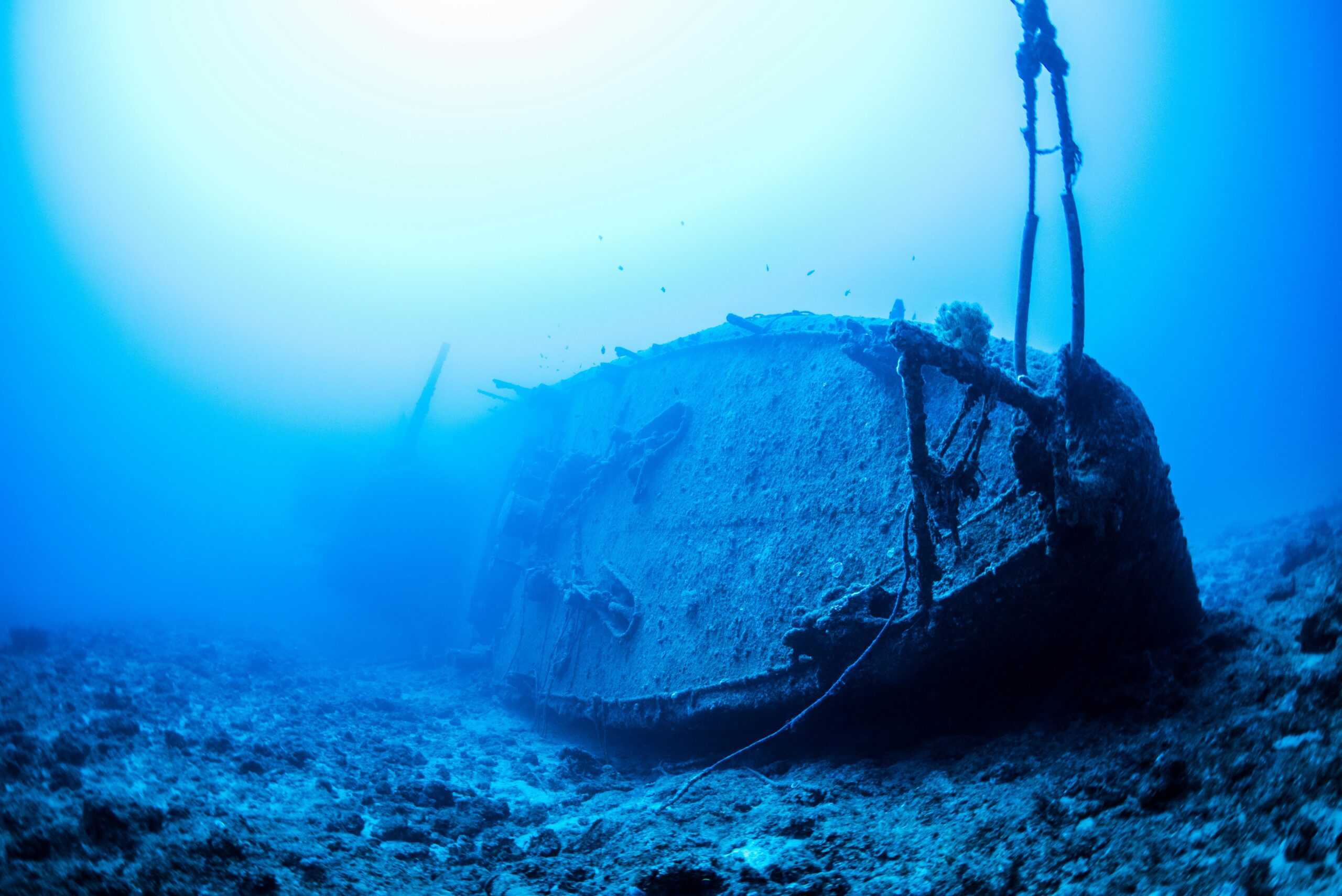
🔍 Preserving Our Submerged Heritage for Future Generations
The archaeological wonders hidden beneath the waves represent irreplaceable connections to our shared human past. As we continue unveiling these sunken secrets, we assume responsibility for protecting them against threats ranging from environmental degradation to commercial exploitation.
International cooperation, adequate funding for archaeological research, and public education about the value of underwater cultural heritage are essential for long-term preservation. Many of the world’s most significant submerged sites remain unexplored or inadequately protected, vulnerable to destruction before their stories can be properly documented and understood.
Every discovered artifact, every mapped structure, and every reconstructed ancient city contributes to the complex narrative of human civilization. These sunken treasures remind us that our ancestors were sophisticated, adaptable, and creative—qualities that remain essential as we navigate our own uncertain environmental and social futures.
The mysteries beneath the waves continue beckoning researchers, promising revelations that will challenge assumptions and expand our understanding of where we came from and perhaps even where we are heading. As technology advances and new sites emerge from the depths, the lost cities of antiquity will continue teaching lessons about innovation, adaptation, and the eternal human drive to build, explore, and endure.

Toni Santos is a visual storyteller and archival artist whose work dives deep into the submerged narratives of underwater archaeology. Through a lens tuned to forgotten depths, Toni explores the silent poetry of lost worlds beneath the waves — where history sleeps in salt and sediment.
Guided by a fascination with sunken relics, ancient ports, and shipwrecked civilizations, Toni’s creative journey flows through coral-covered amphorae, eroded coins, and barnacle-encrusted artifacts. Each piece he creates or curates is a visual meditation on the passage of time — a dialogue between what is buried and what still speaks.
Blending design, storytelling, and historical interpretation, Toni brings to the surface the aesthetics of maritime memory. His work captures the textures of decay and preservation, revealing beauty in rust, ruin, and ruin’s resilience. Through his artistry, he reanimates the traces of vanished cultures that now rest on ocean floors, lost to maps but not to meaning.
As the voice behind Vizovex, Toni shares curated visuals, thoughtful essays, and reconstructed impressions of archaeological findings beneath the sea. He invites others to see underwater ruins not as remnants, but as thresholds to wonder — where history is softened by water, yet sharpened by myth.
His work is a tribute to:
The mystery of civilizations claimed by the sea
The haunting elegance of artifacts lost to time
The silent dialogue between water, memory, and stone
Whether you’re drawn to ancient maritime empires, forgotten coastal rituals, or the melancholic beauty of sunken ships, Toni welcomes you to descend into a space where the past is submerged but never silenced — one relic, one current, one discovery at a time.