
Symbols have always been humanity’s silent language, bridging gaps between cultures, epochs, and worldviews through images that speak louder than words ever could.
🌍 The Universal Language Written in Images
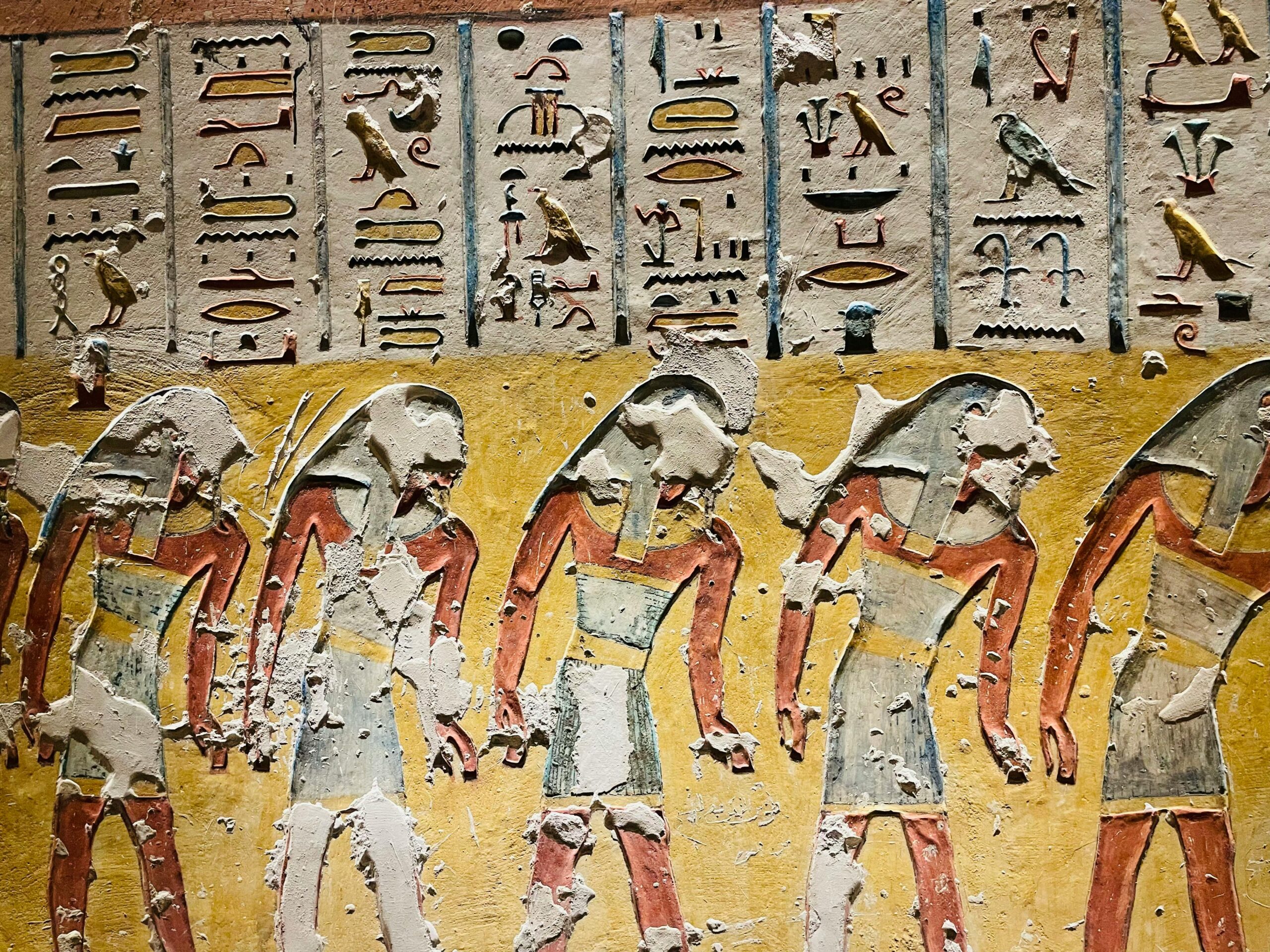
Long before alphabets carved their way into human consciousness, our ancestors painted on cave walls, etched patterns into stone, and fashioned figures from clay. These early visual communications weren’t mere decorations—they were sophisticated systems of meaning that transcended spoken language barriers. From the prehistoric handprints in Argentina’s Cueva de las Manos to the intricate hieroglyphs of ancient Egypt, iconography has served as humanity’s most enduring form of cross-cultural dialogue.
Iconography, at its core, represents the study and interpretation of visual symbols and images. It examines how cultures encode meaning into visual forms and how these forms communicate across temporal and geographical boundaries. What makes iconography particularly fascinating is its ability to carry multiple layers of significance—a single symbol can simultaneously represent religious devotion, political power, cultural identity, and artistic expression.
Ancient Roots: Where Symbols First Took Flight
The earliest human civilizations understood something profound: certain visual forms resonate across cultural boundaries. The circle, for instance, appears in nearly every ancient culture as a symbol of wholeness, eternity, and cosmic order. Whether in Celtic spirals, Chinese yin-yang representations, or Aztec sun stones, the circular form communicates concepts that transcend linguistic differences.
Egyptian hieroglyphs demonstrate iconography’s sophisticated evolution. These weren’t simply pictures representing objects—they were complex symbols that could function as phonetic sounds, complete words, or conceptual determinatives. The ankh symbol, representing life, became so powerful that it influenced religious iconography far beyond Egypt’s borders, appearing in modified forms throughout the Mediterranean and Near Eastern cultures.
Similarly, ancient Mesopotamian iconography developed intricate visual vocabularies. The winged disk, representing divine protection and royal authority, appeared across multiple civilizations from Assyria to Persia, each culture adapting the symbol to their specific theological and political contexts while maintaining its core symbolic power.
Sacred Geometry and Universal Patterns
Certain geometric patterns appear with remarkable consistency across isolated cultures, suggesting either universal human cognitive preferences or ancient cross-cultural exchanges we’re only beginning to understand. The mandala, a geometric configuration of symbols, appears independently in Hindu and Buddhist traditions, Native American sand paintings, and Gothic cathedral rose windows.
These recurring patterns reveal how iconography taps into fundamental aspects of human perception and cognition. The symmetry, proportion, and mathematical relationships embedded in sacred geometry create visual harmonies that resonate across cultural boundaries, making these symbols effective vehicles for communicating transcendent concepts.
Religious Iconography: Visualizing the Invisible 🕊️
Religious traditions have always faced a unique challenge: how to represent the ineffable, the divine, the transcendent. Iconography emerged as the solution, creating visual vocabularies that could point toward spiritual realities beyond ordinary language.
In Christianity, the development of religious iconography became both an art form and a theological battleground. The Byzantine tradition elevated icon painting to a sacred discipline, with specific colors, gestures, and compositional elements carrying precise theological meanings. Gold backgrounds represented divine light, while particular hand positions (mudras in Eastern traditions) conveyed blessing, teaching, or divine authority.
Islamic art, working within strictures against representing divine forms, developed perhaps the most sophisticated abstract iconographic system ever created. Calligraphy became iconography, with Arabic script transformed into visual symbols that simultaneously communicated linguistic meaning and aesthetic beauty. Geometric patterns in Islamic architecture and decorative arts encode complex mathematical and spiritual concepts into visual form.
Hindu iconography presents a contrasting approach, embracing elaborate figurative representation where multiple arms symbolize divine attributes, specific mudras communicate cosmic functions, and the positioning of deities encodes mythological narratives. A single image of Shiva Nataraja contains an entire cosmological treatise on creation, preservation, and destruction.
Buddhist Visual Philosophy
Buddhist iconography demonstrates remarkable adaptability while maintaining core symbolic meanings. As Buddhism traveled from India through Central Asia to China, Japan, and Southeast Asia, its visual language evolved to incorporate local aesthetic preferences while preserving essential symbolic elements. The Buddha’s elongated earlobes, the ushnisha (cranial bump), and specific hand gestures remained consistent even as artistic styles transformed dramatically.
The Eight Auspicious Symbols of Buddhism—the endless knot, lotus flower, dharma wheel, and others—function as a visual catechism, each element teaching specific aspects of Buddhist philosophy without requiring textual literacy. This portability of meaning made iconography essential for Buddhism’s spread across diverse cultures and languages.
Political Power and Symbolic Authority ⚔️
Political entities have always recognized iconography’s power to communicate legitimacy, authority, and collective identity. Heraldry in medieval Europe developed into an elaborate symbolic system where colors, animals, and geometric divisions communicated lineage, alliances, and territorial claims. A trained herald could “read” a coat of arms like a biographical text.
National flags represent concentrated political iconography, distilling complex national identities into simple visual forms. The American stars and stripes, the British Union Jack, the Japanese rising sun—each compresses historical narratives, political philosophies, and cultural values into instantly recognizable symbols that command emotional responses and political allegiance.
Revolutionary movements understand iconography’s persuasive power. The raised fist, the red star, the peace symbol, Che Guevara’s iconic portrait—these images transcend linguistic barriers to communicate political positions and mobilize collective action. Their simplicity makes them reproducible; their symbolic resonance makes them memorable.
Commercial Iconography: Symbols in the Marketplace 🛍️
Modern corporate branding represents iconography’s evolution into commercial contexts. The Nike swoosh, Apple’s bitten apple, McDonald’s golden arches—these symbols achieve what ancient religious icons once did: they create immediate recognition, evoke emotional responses, and communicate complex value propositions without words.
Effective brand iconography taps into archetypal symbols and cultural associations. The swoosh suggests motion and victory, connecting to Nike, the Greek goddess of triumph. Apple’s logo evokes knowledge, forbidden fruit, and technological innovation simultaneously. These multilayered meanings create deep psychological connections with consumers.
Digital culture has spawned entirely new iconographic systems. Emojis represent perhaps the fastest-adopted global symbolic language in human history, creating a visual vocabulary that transcends language barriers while introducing new ambiguities and cultural variations in interpretation. What reads as humor in one culture may communicate entirely different meanings in another.
Cross-Cultural Symbol Migration and Transformation 🌏
Symbols rarely remain static as they move between cultures. Instead, they undergo fascinating transformations that reveal how different societies reinterpret visual forms according to their own values and contexts. The swastika provides a sobering example—an ancient symbol of auspiciousness in Hindu and Buddhist traditions, appropriated and permanently tainted by Nazi ideology in Western consciousness.
The dragon offers a more nuanced case study in symbolic migration. In European traditions, dragons typically represent chaos, evil, and forces requiring defeat. In Chinese culture, dragons symbolize wisdom, power, and auspicious fortune. When these iconographic traditions encounter each other, they create complex cross-cultural negotiations about meaning and representation.
The Lotus Across Traditions
The lotus flower demonstrates how a single symbol can carry different yet related meanings across cultures. In Egyptian iconography, it represented rebirth and the sun. In Hinduism and Buddhism, it symbolizes spiritual awakening and purity emerging from muddy waters. In contemporary Western contexts, it often signifies yoga, meditation, and Eastern spiritual practices—a simplified version of its complex traditional meanings.
This migration pattern reveals both iconography’s flexibility and the risks of decontextualization. Symbols extracted from their original cultural contexts can lose nuanced meanings or acquire superficial associations that obscure their deeper significance.
Digital Age: Iconography in Transformation 📱
The digital revolution has fundamentally altered how iconography functions and spreads. User interface design has created universal visual languages—the hamburger menu, the shopping cart icon, the magnifying glass for search—that billions of people recognize instantly regardless of linguistic background.
Social media platforms have democratized symbol creation and dissemination. Memes represent a new form of iconography, combining images and text to create meaning that spreads virally across cultural boundaries. The “distracted boyfriend” meme template, for instance, becomes a universal structure for communicating divided attention and misplaced priorities across countless specific contexts.
Augmented and virtual reality technologies are creating immersive iconographic environments where symbols exist not as flat images but as three-dimensional, interactive elements. These developments raise fascinating questions about how spatial and temporal dimensions will transform symbolic communication in coming decades.
Educational Applications: Teaching Through Symbols 📚
Educators increasingly recognize iconography’s pedagogical value. Visual learning strategies leverage humanity’s highly developed capacity for processing and remembering images. Infographics, mind maps, and visual note-taking systems translate complex information into iconographic forms that enhance comprehension and retention.
Cultural education particularly benefits from iconographic analysis. Teaching students to “read” symbols from different traditions develops visual literacy while fostering cultural understanding. Comparing how different cultures represent similar concepts—death, marriage, authority, nature—reveals both universal human concerns and fascinating cultural variations.
Language learning applications now incorporate iconography extensively, using visual symbols to bridge the gap between unfamiliar words and comprehensible concepts. This approach mirrors how ancient cultures used visual forms to communicate across language barriers.
Psychological Dimensions: Why Symbols Resonate 🧠
Cognitive psychology reveals why iconography exerts such powerful influence over human perception and behavior. The brain processes visual information significantly faster than text, making symbols effective for rapid communication. Moreover, images engage emotional centers more directly than abstract language, creating stronger memory formation and emotional responses.
Archetypal theory, developed by Carl Jung, suggests certain symbols tap into collective unconscious patterns shared across humanity. Whether or not universal archetypes exist as Jung proposed, certain visual forms—the mother figure, the hero’s journey, the shadow self—appear across diverse cultures with remarkable consistency, suggesting either deep psychological commonalities or extensive cross-cultural influence.
Color psychology adds another dimension to iconographic meaning. Red’s association with passion, danger, and energy; blue’s connection to calm, trust, and stability; green’s link to nature and growth—these associations vary somewhat across cultures but show enough consistency to function as meaningful symbolic elements in cross-cultural communication.
Future Horizons: Where Iconography Leads Next 🚀
Artificial intelligence and machine learning are beginning to analyze and generate iconography in unprecedented ways. Algorithms can now identify patterns across vast databases of cultural symbols, revealing connections and influences that human researchers might miss. AI-generated art raises provocative questions about authorship, originality, and cultural authenticity in symbolic creation.
Climate change and global challenges are spawning new iconographic languages. The recycling symbol, carbon footprint graphics, and climate emergency visualizations create shared symbolic vocabularies for addressing planetary-scale problems. These emerging symbols must function across all cultures and languages—a return to iconography’s ancient role as universal communicator.
Space exploration introduces entirely new contexts for iconographic communication. The Pioneer plaques and Voyager Golden Records represent human attempts to create symbols comprehensible to potential extraterrestrial intelligences—the ultimate test of iconography’s claim to universal communication.
Preserving Cultural Meaning While Embracing Connection 🤝
As global communication intensifies, iconography faces a paradox. We need shared visual languages to facilitate cross-cultural understanding, yet we must preserve the specific cultural contexts that give symbols their richest meanings. The challenge lies in creating iconographic bridges that connect cultures without flattening their distinctive perspectives into homogenized global symbols.
Indigenous communities worldwide are reclaiming and revitalizing traditional iconographic systems that colonialism attempted to erase. This cultural resurgence recognizes that symbols carry not just aesthetic value but embedded knowledge, historical memory, and cultural identity. Petroglyphs, traditional patterns, and ceremonial imagery represent irreplaceable cultural heritage requiring protection and respectful engagement.
Museums and cultural institutions increasingly recognize their responsibility to contextualize iconography properly, moving beyond purely aesthetic appreciation to engage with symbols’ cultural meanings, spiritual significance, and historical contexts. This shift acknowledges that iconography isn’t merely decoration but embodied cultural knowledge.
Living Symbols: Meaning That Evolves and Endures ✨
The most powerful symbols maintain relevance by balancing continuity with adaptability. The cross, the star, the circle, the tree—these forms have carried meaning for millennia precisely because each generation reinterprets them according to contemporary needs while maintaining connections to ancestral significance.
Contemporary artists and designers continue innovating within iconographic traditions, creating new symbols that address modern realities while drawing on ancient visual wisdom. Street art, digital illustration, and mixed media works blend traditional symbolic forms with cutting-edge techniques, demonstrating iconography’s ongoing vitality as a mode of cultural expression and communication.
Understanding iconography—how symbols encode meaning, cross cultural boundaries, and shape perspectives across time—equips us to navigate our intensely visual, globally connected world with greater awareness and insight. Every image carries layers of meaning, every symbol connects to broader networks of significance, every visual form participates in humanity’s ancient, ongoing conversation across cultures and centuries.
As we decode these visual languages, we discover that symbols don’t just represent ideas—they actively shape how we think, perceive, and relate to others. Iconography remains one of humanity’s most sophisticated technologies for connecting across differences while honoring distinctiveness, for communicating complex meanings efficiently, and for maintaining cultural memory across generations. In recognizing these patterns and meanings, we join the long tradition of humans who have looked beyond surface appearances to discover the rich symbolic worlds that connect us all.

Toni Santos is a maritime researcher and underwater archaeologist specializing in the study of submerged heritage, ancient port systems, and the cultural landscapes preserved beneath the sea. Through an interdisciplinary and immersive approach, Toni investigates how humanity has left traces of knowledge, commerce, and legend in the underwater world — across oceans, myths, and sunken cities.
His work is grounded in a fascination with wrecks not only as artifacts, but as carriers of hidden meaning. From historic shipwreck discoveries to mythical harbors and lost coastal settlements, Toni uncovers the physical and cultural evidence through which civilizations preserved their relationship with the maritime unknown.
With a background in marine archaeology and underwater survey methods, Toni blends technical analysis with archival research to reveal how oceans were used to shape identity, transmit memory, and encode sacred knowledge.
As the creative mind behind revaltro, Toni curates documented dive studies, speculative harbor maps, and archaeological interpretations that revive the deep cultural ties between water, folklore, and forgotten science.
His work is a tribute to:
The submerged heritage of Historic Shipwrecks and Their Cargoes
The legendary sites of Mythical Harbors and Lost Civilizations
The technical methods of Underwater Exploration Techniques
The natural archiving power of Preservation in Salt and Sediment
Whether you’re a maritime historian, nautical researcher, or curious explorer of forgotten submerged worlds, Toni invites you to explore the hidden depths of oceanic heritage — one wreck, one harbor, one legend at a time.