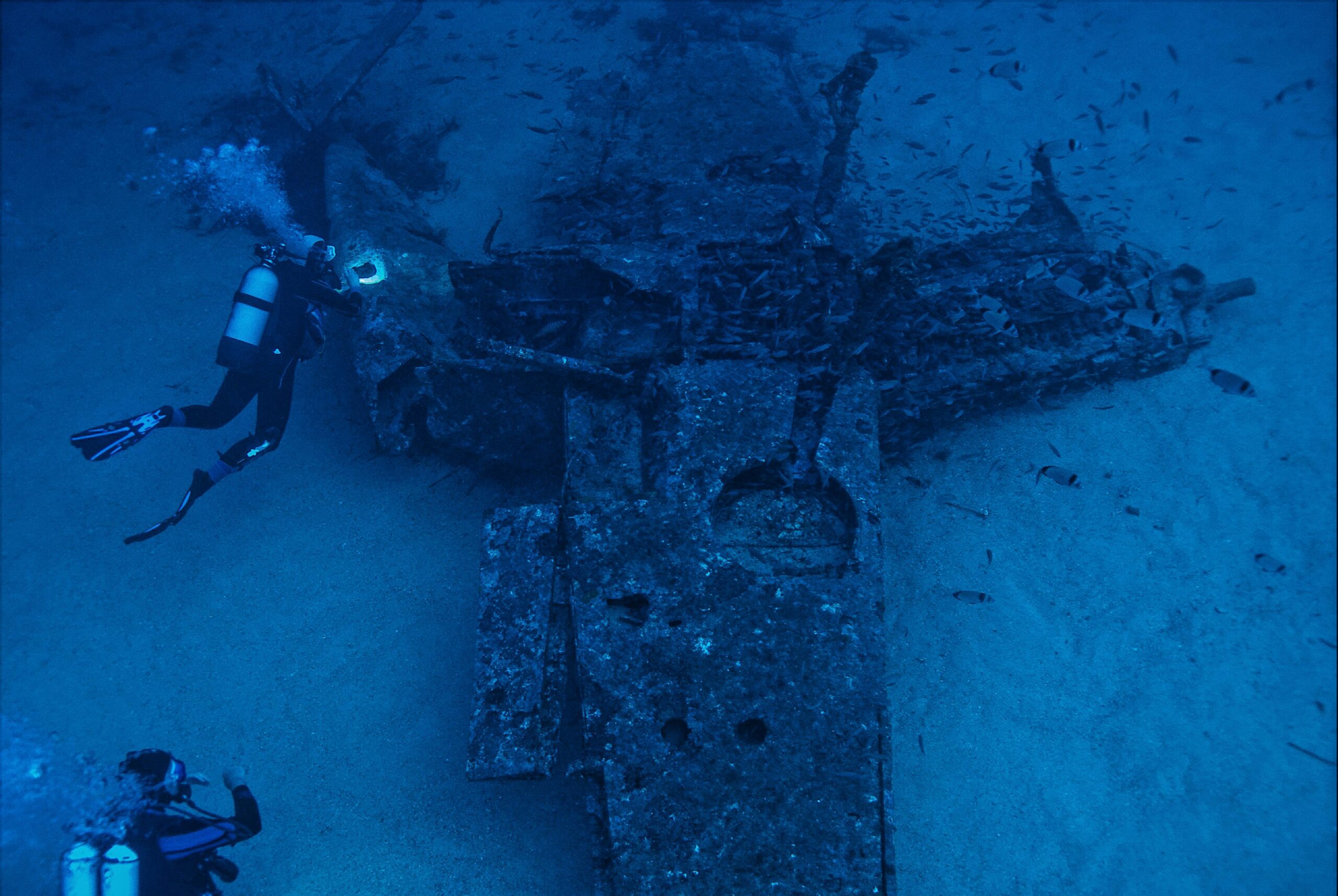
In 1900, sponge divers off the Greek island of Antikythera stumbled upon one of history’s most extraordinary archaeological treasures: a shipwreck containing the world’s first analog computer.
🌊 The Fateful Discovery Beneath the Aegean Waters
Captain Dimitrios Kondos and his crew of sponge divers were seeking their fortune in the crystal-clear waters of the Mediterranean when a violent storm forced them to take shelter near the small rocky island of Antikythera. As the weather cleared, diver Elias Stadiatis descended to explore the seabed, expecting to find the usual sponge beds. Instead, he surfaced with tales of bronze limbs, marble statues, and rotting corpses scattered across the ocean floor at a depth of approximately 45 meters.
What Stadiatis had initially mistaken for bodies were actually ancient bronze and marble statues, part of a magnificent cargo that had rested undisturbed for over two millennia. The Greek government quickly organized an archaeological expedition, and between November 1900 and September 1901, divers recovered an astonishing collection of artifacts from what would become known as the Antikythera shipwreck.
Among the treasures brought to the surface were exquisite bronze statues, delicate glassware, luxury pottery, jewelry, and various other precious items. Yet hidden among these obvious treasures was a corroded, unassuming lump of bronze and wood that would eventually revolutionize our understanding of ancient technology.
⚙️ The Mysterious Corroded Mechanism Emerges
On May 17, 1902, archaeologist Valerios Stais was examining the artifacts recovered from the shipwreck at the National Archaeological Museum in Athens when he noticed something extraordinary. What appeared to be a corroded rock had split open, revealing a complex system of bronze gears and inscriptions. The discovery was initially met with skepticism and confusion.
The object, later named the Antikythera Mechanism, measured approximately 34 centimeters high, 18 centimeters wide, and 9 centimeters deep in its original state. It consisted of at least 30 meshing bronze gears housed in a wooden frame, with inscriptions covering much of its surface. The mechanism’s complexity was utterly unprecedented for an artifact dating to around 150-100 BCE.
For decades, scholars debated its purpose and function. Some dismissed it as a navigational instrument, while others proposed it might be an astrolabe or some form of astronomical tool. The true nature of this remarkable device would remain a mystery for more than half a century.
🔬 Decades of Scientific Investigation and Revelation
The breakthrough in understanding the Antikythera Mechanism came in 1951 when British science historian Derek J. de Solla Price began a comprehensive study of the device. Using X-ray and gamma-ray imaging, Price discovered the mechanism’s internal structure was far more sophisticated than anyone had imagined.
In 1974, Price published his landmark paper “Gears from the Greeks,” proposing that the device was an ancient analog computer designed to calculate astronomical positions. His work demonstrated that the mechanism could predict the positions of the sun, moon, and possibly the five planets known to the ancient Greeks: Mercury, Venus, Mars, Jupiter, and Saturn.
Modern research using advanced imaging techniques has revealed even more astonishing capabilities. In 2005, the Antikythera Mechanism Research Project, led by mathematicians Tony Freeth and Mike Edmunds, employed cutting-edge X-ray computed tomography to peer inside the corroded fragments without damaging them.
🌟 The Mechanism’s Extraordinary Capabilities Unveiled
Current research has identified that the Antikythera Mechanism possessed numerous sophisticated functions that demonstrate an advanced understanding of astronomy and mathematics. The device could perform calculations that would have taken trained astronomers considerable time to complete manually.
Primary Functions of the Ancient Computer
The mechanism’s front dial displayed the Greek zodiac and an Egyptian calendar, allowing users to track the positions of celestial bodies throughout the year. By turning a hand crank, operators could move the date forward or backward, and the internal gears would automatically calculate and display the corresponding astronomical information.
On the rear of the device, two spiral dials served distinct purposes. The upper spiral dial predicted eclipses using the Saros cycle, an 18-year period after which eclipses repeat in similar patterns. This dial could forecast both solar and lunar eclipses with remarkable accuracy, including their times and characteristics.
The lower rear dial tracked the Metonic cycle, a 19-year period after which the phases of the moon repeat on the same days of the solar year. This dial also indicated the timing of the ancient Greek athletic games, including the Olympics, Pythian, Isthmian, and Nemean games.
The Gear System Architecture
The mechanism’s gear train demonstrates mathematical sophistication that scholars once believed impossible for the ancient world. The gears were cut with triangular teeth, a design that provides smooth, efficient operation. The gear ratios were precisely calculated to model celestial cycles with extraordinary accuracy.
Researchers have identified at least 30 gears in the surviving fragments, though the complete mechanism likely contained more. Some gears have as few as 15 teeth, while others contain over 200. The precision required to manufacture these components challenges our assumptions about ancient metalworking capabilities.
📜 Deciphering the Ancient Instructions
The mechanism’s surfaces were covered with approximately 3,500 characters of text, serving as an instruction manual for operators. Using advanced imaging techniques, researchers have deciphered much of this writing, revealing detailed information about the device’s construction and operation.
The inscriptions describe astronomical phenomena, provide instructions for interpreting the dial readings, and explain the mechanism’s predictive capabilities. The text confirms that the device was designed as a teaching tool and computational instrument, likely used by astronomers, philosophers, or wealthy individuals interested in celestial phenomena.
One particularly fascinating inscription describes the colors associated with eclipses, demonstrating that the mechanism’s creators understood atmospheric effects on celestial observations. The level of astronomical knowledge encoded in these texts rivals that of much later periods.
🏛️ Historical Context and Technological Implications
The Antikythera Mechanism dates to the late Hellenistic period, a time of remarkable scientific and technological advancement in the Greek world. This era saw the work of brilliant minds like Archimedes, Hipparchus, and Apollonius, who made groundbreaking contributions to mathematics, astronomy, and engineering.
The mechanism’s design suggests it may have been constructed on the island of Rhodes, a major center of astronomy and mechanical engineering in ancient times. The astronomer Hipparchus, who worked on Rhodes and created the first comprehensive star catalog, may have influenced the mechanism’s astronomical models.
The device’s existence raises profound questions about the technological capabilities of ancient civilizations. If such sophisticated analog computers existed over 2,000 years ago, what other advanced technologies might have been lost to history? The gap between the Antikythera Mechanism and any comparable device spans more than a millennium, leading to speculation about lost knowledge and technological regression.
🔍 Modern Analysis and Ongoing Research
Contemporary researchers continue to make new discoveries about the Antikythera Mechanism using increasingly sophisticated analytical techniques. High-resolution 3D X-ray imaging has revealed previously invisible inscriptions and mechanical details, allowing scientists to create increasingly accurate reconstructions of the complete device.
Several teams worldwide have built working replicas of the mechanism, demonstrating that ancient craftsmen could indeed have manufactured such a complex instrument with the tools available in their time. These reconstructions have confirmed the device’s operational principles and revealed the ingenuity of its design.
In 2021, researchers published a new reconstruction of the mechanism’s front display, proposing a complete model of how all the gears worked together to show planetary motions. This model suggests the device tracked all five known planets using an ingenious system of epicyclic gearing that modeled the planets’ irregular movements across the sky.
⚓ The Shipwreck: A Time Capsule of Ancient Luxury
The ship that carried the Antikythera Mechanism was likely a large merchant vessel transporting luxury goods from the eastern Mediterranean, possibly from Rhodes or Asia Minor, to Rome. The vessel probably sank during a storm sometime between 70 and 60 BCE, based on analysis of the artifacts and coins recovered from the wreck.
The cargo included items that reveal the tastes and interests of wealthy Romans during the late Republic period. Bronze and marble statues depicted gods, heroes, and athletes. Fine glassware, jewelry, and pottery indicated the ship was carrying goods destined for affluent collectors.
Modern archaeological expeditions to the site, including missions in 2014-2015 using advanced diving technology and underwater robots, have recovered additional artifacts and gathered new data about the shipwreck. These expeditions revealed that the site is larger than originally believed, suggesting more treasures may still lie buried beneath the sediment.
🌐 Impact on Understanding Ancient Science and Technology
The Antikythera Mechanism has fundamentally altered our perception of ancient technological sophistication. Before its discovery and analysis, historians believed that complex geared mechanisms didn’t appear until medieval European clockwork. The mechanism demonstrates that ancient engineers possessed both the theoretical knowledge and practical skills to create sophisticated analog computers.
This discovery has prompted scholars to reevaluate other ancient texts that describe mechanical devices. References in ancient writings to automated theaters, mechanical servants, and astronomical instruments are now taken more seriously, suggesting a rich tradition of complex engineering that has largely disappeared from the historical record.
The mechanism also highlights the interconnected nature of ancient scientific knowledge. Its design incorporates Babylonian astronomical period relations, Egyptian calendrical systems, and Greek mechanical engineering, demonstrating the cosmopolitan character of Hellenistic science.
💡 Legacy and Modern Relevance
The Antikythera Mechanism stands as a powerful reminder that technological progress is not always linear. Civilizations can achieve remarkable heights of sophistication, only to see that knowledge lost through war, natural disasters, economic collapse, or simple neglect. The device serves as a humbling example of how much we still have to learn about our ancestors’ achievements.
Today, the surviving fragments of the mechanism reside in the National Archaeological Museum of Athens, where they continue to fascinate visitors and researchers alike. The device has inspired countless reconstructions, documentaries, research papers, and educational programs, bringing ancient Greek technology to life for modern audiences.
The ongoing research into the Antikythera Mechanism exemplifies how modern technology can unlock secrets from the past. Advanced imaging techniques, computer modeling, and international collaboration have allowed us to peer across two millennia and appreciate the genius of ancient engineers and astronomers.
🎯 Lessons from the Ancient Computer
The story of the Antikythera Mechanism teaches us several important lessons. First, it demonstrates the value of preserving and carefully studying archaeological artifacts, even when their purpose is not immediately apparent. The corroded lump that Valerios Stais noticed in 1902 could easily have been discarded as unremarkable debris.
Second, the mechanism reminds us to maintain humility about our assumptions regarding ancient peoples. For too long, scholars dismissed the possibility that ancient civilizations could create such sophisticated devices, allowing bias to cloud scientific judgment. The mechanism proves that our ancestors were every bit as intelligent and ingenious as we are today.
Finally, the device underscores the fragility of knowledge and technology. Despite the mechanism’s sophistication, the technology it represents disappeared almost entirely from the historical record, not to be matched until centuries later. This loss reminds us of the importance of preserving and transmitting knowledge across generations.

🔮 The Future of Antikythera Research
As technology continues to advance, researchers expect to make even more discoveries about the Antikythera Mechanism. Improved imaging techniques may reveal additional inscriptions and mechanical details hidden within the corroded fragments. Computer modeling and artificial intelligence could help reconstruct missing components and predict the mechanism’s full original capabilities.
Future archaeological expeditions to the Antikythera shipwreck site may uncover additional fragments of the mechanism or even other similar devices. The possibility remains that the ship carried more than one mechanical instrument, or that other ancient shipwrecks might yield comparable technological treasures.
The mechanism continues to inspire modern engineers, computer scientists, and educators. Its elegant mechanical design offers lessons in efficient problem-solving and demonstrates how complex calculations can be performed using purely mechanical means—principles that remain relevant even in our digital age.
The Antikythera Mechanism stands as one of archaeology’s most remarkable discoveries, a device that has rewritten the history of technology and reminded us of the extraordinary achievements possible when human curiosity, mathematical insight, and mechanical skill combine. This ancient analog computer, recovered from the depths of the Mediterranean Sea, continues to reveal its secrets, offering a tangible connection to the brilliant minds who crafted it over two thousand years ago and challenging us to preserve and advance the knowledge we inherit from previous generations.

Toni Santos is a maritime researcher and underwater archaeologist specializing in the study of submerged heritage, ancient port systems, and the cultural landscapes preserved beneath the sea. Through an interdisciplinary and immersive approach, Toni investigates how humanity has left traces of knowledge, commerce, and legend in the underwater world — across oceans, myths, and sunken cities.
His work is grounded in a fascination with wrecks not only as artifacts, but as carriers of hidden meaning. From historic shipwreck discoveries to mythical harbors and lost coastal settlements, Toni uncovers the physical and cultural evidence through which civilizations preserved their relationship with the maritime unknown.
With a background in marine archaeology and underwater survey methods, Toni blends technical analysis with archival research to reveal how oceans were used to shape identity, transmit memory, and encode sacred knowledge.
As the creative mind behind revaltro, Toni curates documented dive studies, speculative harbor maps, and archaeological interpretations that revive the deep cultural ties between water, folklore, and forgotten science.
His work is a tribute to:
The submerged heritage of Historic Shipwrecks and Their Cargoes
The legendary sites of Mythical Harbors and Lost Civilizations
The technical methods of Underwater Exploration Techniques
The natural archiving power of Preservation in Salt and Sediment
Whether you’re a maritime historian, nautical researcher, or curious explorer of forgotten submerged worlds, Toni invites you to explore the hidden depths of oceanic heritage — one wreck, one harbor, one legend at a time.