The ocean floor holds countless stories of conflict, innovation, and loss. Among these are weapons that sank with ships, planes, and submarines, waiting to reveal their secrets.
⚓ The Silent Guardians of Naval History
Beneath the waves lies an extraordinary collection of military artifacts that span centuries of warfare. From medieval cannons to World War II torpedoes, these sunken arsenals represent frozen moments in time, preserved by the ocean’s depths. Marine archaeologists and historians have dedicated their careers to uncovering these weapons, not merely as relics of destruction, but as invaluable windows into technological advancement, military strategy, and human history.
The discovery of underwater weapons caches has accelerated dramatically in recent decades, thanks to advances in sonar technology, remote-operated vehicles, and deep-sea exploration techniques. Each find adds another piece to the complex puzzle of maritime military history, revealing details about manufacturing processes, tactical deployment, and the human stories behind these instruments of war.
🔍 Revolutionary Technologies Uncovering Hidden Arsenals
Modern marine archaeology relies on sophisticated equipment that would have seemed like science fiction just fifty years ago. Multi-beam sonar systems can map vast stretches of ocean floor with remarkable precision, detecting anomalies that might indicate wreckage sites. Side-scan sonar creates detailed images of submerged objects, allowing researchers to identify potential weapon locations before deploying more expensive resources.
Remotely operated vehicles (ROVs) equipped with high-definition cameras can descend to depths impossible for human divers, documenting weapons in their underwater resting places without disturbing delicate ecosystems or potentially dangerous ordnance. These technological marvels have opened previously inaccessible areas of the ocean to scientific investigation, revealing weapon deposits that tell compelling stories about naval engagements, shipwrecks, and strategic operations.
Advanced Imaging and Detection Methods
Magnetometers detect ferrous metals buried beneath sediment, making them invaluable for locating cannons, anchors, and steel weaponry that might be completely hidden from visual inspection. Ground-penetrating radar adapted for underwater use can reveal objects buried meters beneath the seabed, while chemical sensors detect explosive residues that indicate ammunition dumps or ordnance disposal sites.
These technologies work in concert, creating comprehensive surveys of underwater sites that guide excavation efforts and help researchers prioritize which locations deserve closer examination. The data collected forms detailed three-dimensional maps that allow scientists to study sites remotely, reducing the need for disruptive physical intervention.
🗡️ Medieval and Early Modern Discoveries
Some of the most fascinating underwater weapon discoveries date back to the age of sail and even earlier periods. Bronze cannons from Spanish galleons rest on Caribbean reefs, their surfaces encrusted with coral but their fundamental structures remarkably intact. These artifacts reveal details about Renaissance metallurgy, ballistics knowledge, and the global trade networks that supplied European navies with weaponry.
The discovery of Viking swords in Scandinavian waterways has provided insights into Norse metalworking techniques and combat practices. These weapons, often deliberately deposited as votive offerings, showcase the spiritual significance of arms in medieval culture alongside their practical military applications. Similarly, ancient Greek and Roman naval rams recovered from Mediterranean wrecks demonstrate the sophisticated engineering that powered ancient warfare.
Preservation Challenges with Ancient Weaponry
Weapons that have spent centuries underwater face unique preservation challenges. Salt water, marine organisms, and electrochemical processes gradually degrade metal objects, yet paradoxically, the underwater environment often provides better preservation than terrestrial burial. The absence of oxygen in deep-sea sediments can slow corrosion dramatically, leaving weapons in surprisingly good condition.
When raised to the surface, these artifacts require immediate conservation treatment to prevent rapid deterioration from exposure to air. Electrolytic reduction baths, protective coatings, and controlled environmental storage are essential to preserve these historical treasures for future study and public display.
💣 World War Relics Beneath the Waves
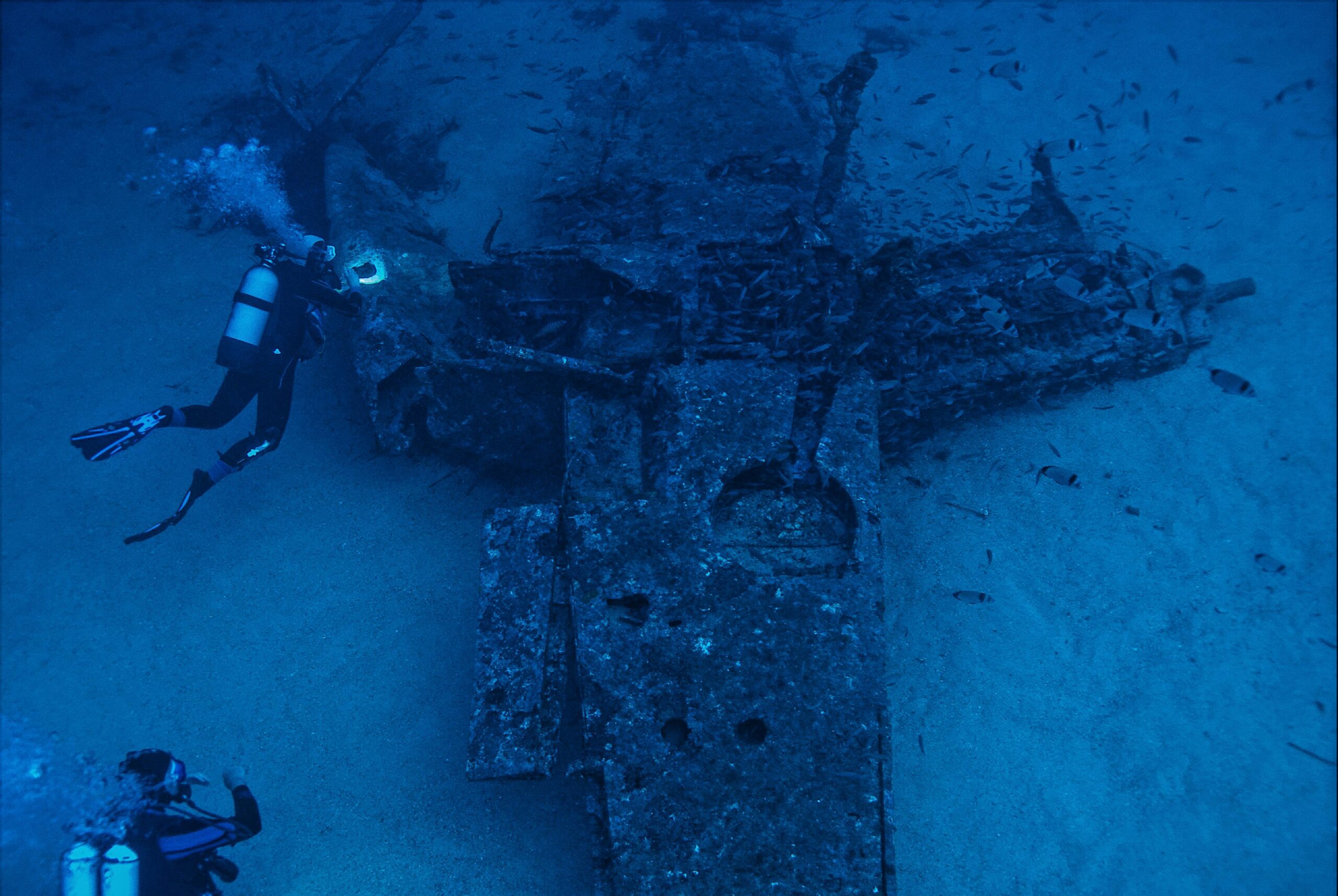
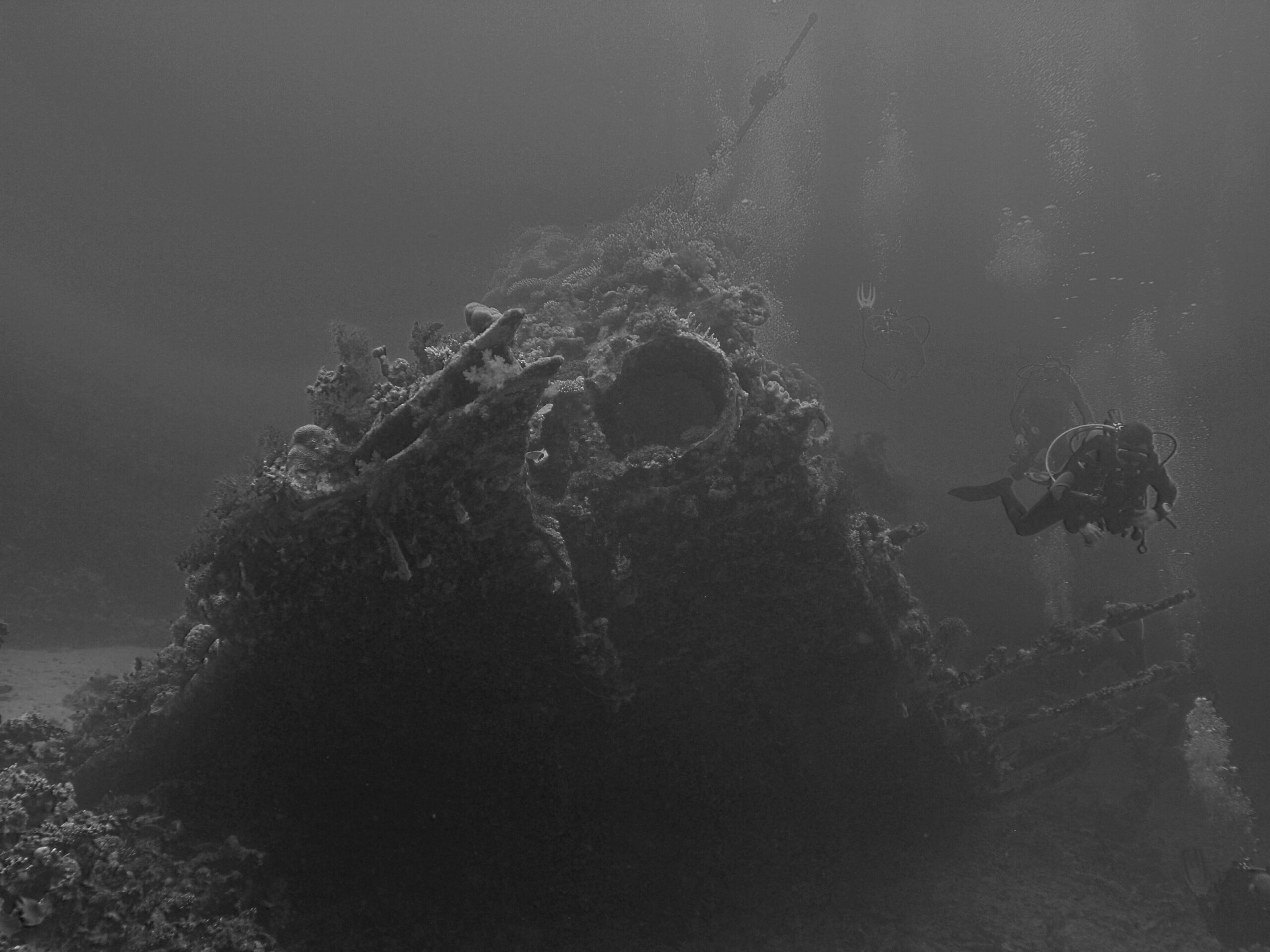
The two World Wars scattered an unprecedented amount of military hardware across the ocean floor. Battleships, submarines, fighter planes, and transport vessels carrying munitions now form artificial reefs inhabited by marine life, but they also represent potential hazards and invaluable historical resources.
The discovery of sunken U-boats has provided remarkable insights into German engineering and submarine warfare tactics. Torpedoes found in these wrecks reveal the evolution of guided weapon technology, while personal arms recovered from crew quarters tell poignant human stories about the sailors who operated these vessels. Similarly, Allied vessels sunk during convoy operations have yielded collections of small arms, depth charges, and anti-aircraft weapons that document the progression of military technology throughout the conflict.
The Pacific Theater’s Submerged Arsenal
The Pacific Ocean holds particularly dense concentrations of World War II weaponry, especially around former battlegrounds like Guadalcanal, Midway, and Okinawa. Dive expeditions to these sites have documented extensive collections of aircraft-mounted machine guns, naval artillery, and unexploded ordnance that remain dangerous decades after the war’s conclusion.
Japanese vessels containing unique weapon systems have attracted particular attention from military historians. The discovery of kaiten suicide torpedoes, specialized anti-aircraft weapons, and experimental armaments has shed light on Japan’s desperate final war efforts and technological innovations born from strategic necessity.
🌊 Environmental and Safety Considerations
Underwater weapons present significant challenges beyond their historical value. Unexploded ordnance remains chemically active and potentially deadly, requiring explosive ordnance disposal experts to assess sites before archaeological work can proceed. Chemical weapons deliberately dumped in oceanic trenches after both World Wars pose ongoing environmental threats as their containers corrode and release toxic contents.
Marine archaeologists must balance scientific curiosity with environmental responsibility and public safety. Many weapon-laden wrecks are designated as war graves, legally protected sites where human remains rest alongside the arms they once carried. Ethical considerations demand respectful treatment of these locations, limiting intrusive investigation and preventing commercial exploitation.
Corrosion and Chemical Leaching
Heavy metals from corroding weapons leach into surrounding waters, creating localized pollution that affects marine ecosystems. Lead, mercury, and other toxic substances accumulate in sediments and marine organisms, potentially entering the human food chain through contaminated seafood. Monitoring these sites for environmental contamination has become an important aspect of underwater archaeological work.
Phosphorus-based incendiary weapons pose particular risks as they can spontaneously ignite when disturbed, creating underwater fires and releasing toxic gases. Researchers must carefully assess the chemical composition of discovered ordnance before deciding whether to raise, neutralize, or leave artifacts in place.
🏛️ Museums and Public Education
Recovered underwater weapons find homes in maritime museums worldwide, where they serve educational purposes and connect modern audiences with maritime military history. Interactive exhibits allow visitors to understand the human contexts surrounding these objects, moving beyond mere technical specifications to explore the lives of sailors, soldiers, and civilians affected by naval warfare.
The USS Monitor’s turret, recovered from waters off North Carolina, exemplifies how underwater weapon preservation creates powerful educational opportunities. This Civil War innovation in naval architecture has undergone extensive conservation treatment, allowing millions of visitors to witness firsthand the revolutionary technology that transformed naval combat.
Virtual Exploration and Digital Preservation
Not all underwater weapon sites can or should be physically excavated. Digital documentation techniques create detailed three-dimensional models of submerged artifacts, allowing worldwide audiences to explore these sites virtually without disturbing them. Photogrammetry, laser scanning, and virtual reality technologies democratize access to underwater cultural heritage while preserving fragile sites for future generations.
These digital archives serve research purposes beyond public education, enabling comparative studies across multiple sites and time periods. Ballistics experts can analyze weapon designs without handling fragile artifacts, while metallurgists can study manufacturing techniques through high-resolution imaging.
⚔️ Notable Discoveries That Changed Historical Understanding
Certain weapon discoveries have fundamentally altered our understanding of historical events. The recovery of bronze cannons from the Mary Rose, Henry VIII’s flagship, revealed unexpected details about Tudor naval warfare and gun founding techniques. These weapons demonstrated that English gunnery was more sophisticated than previously believed, forcing historians to reassess naval power dynamics in sixteenth-century Europe.
Similarly, the discovery of advanced fire-control systems in Japanese battleship wrecks challenged assumptions about Pacific War naval technology. These findings demonstrated that Japanese naval engineering was more innovative than Allied intelligence had recognized, explaining unexpected tactical successes earlier in the conflict.
Rewriting Military Technology Timelines
Underwater weapon discoveries frequently push back dates for technological innovations. An ancient Greek flame weapon mechanism recovered from a Mediterranean wreck predated similar devices in the historical record by centuries, suggesting more sophisticated Byzantine naval technology than previously documented. Medieval crossbow mechanisms found in Baltic shipwrecks showed construction techniques that weren’t thought to exist until later periods.
These finds remind us that technological development rarely follows linear paths. Innovations emerge, disappear, and reemerge as knowledge transfers across cultures and time periods, with underwater archaeological evidence providing concrete proof of historical technological capabilities.
🔐 Legal and Ethical Frameworks
International law governing underwater cultural heritage has evolved significantly to address weapon-laden wreck sites. The UNESCO Convention on the Protection of Underwater Cultural Heritage establishes principles for responsible investigation, emphasizing scientific research over commercial salvage and respecting sites as cultural patrimony rather than exploitable resources.
Military vessels often remain sovereign property of their nations of origin, regardless of how long they’ve rested underwater. This creates complex legal situations when weapons are discovered in international waters or within other nations’ territorial seas. Diplomatic negotiations frequently precede archaeological work on military wrecks, ensuring appropriate permissions and establishing clear ownership of recovered artifacts.
Commercial Salvage Versus Archaeological Science
Tension persists between commercial salvage operations seeking valuable materials and archaeological teams pursuing historical knowledge. Weapons made from precious metals or containing valuable components attract treasure hunters who may damage sites and destroy contextual information that gives artifacts scientific meaning. Legislation increasingly favors archaeological approaches that document findings comprehensively rather than simply extracting valuable objects.
The black market for military antiques creates incentives for illegal salvage, threatening underwater sites worldwide. Law enforcement agencies increasingly cooperate internationally to combat underwater cultural heritage theft, recognizing that these weapons represent irreplaceable historical resources belonging to all humanity.
🧭 Future Frontiers in Underwater Weapons Archaeology
Technological advances continue opening new possibilities for underwater weapon discovery and study. Artificial intelligence algorithms now analyze sonar data, identifying potential wreck sites among vast oceanic territories that would take human researchers lifetimes to survey manually. Machine learning systems recognize weapon signatures in visual data, helping archaeologists locate specific artifact types within complex wreck environments.
Autonomous underwater vehicles operating independently can conduct extended surveys in remote locations, mapping previously unexplored ocean regions where undiscovered arsenals likely rest. These robotic systems work continuously, unaffected by the physical limitations that constrain human divers, dramatically expanding the scope of possible archaeological investigation.
Climate Change and Site Accessibility
Paradoxically, climate change is both threatening and revealing underwater weapon sites. Rising sea levels inundate coastal fortifications, creating new underwater archaeological sites, while changing ocean chemistry accelerates corrosion of metal artifacts. Simultaneously, melting polar ice opens previously inaccessible Arctic waters containing wrecks from exploration expeditions and World War II convoy routes.
Researchers race against time to document vulnerable sites before environmental changes destroy irreplaceable historical evidence. This urgency has intensified international cooperation and funding for underwater archaeological projects, recognizing that weapons beneath the waves hold knowledge that may soon be lost forever.
🎯 The Human Stories Behind Sunken Weapons
Beyond their technical specifications and historical significance, underwater weapons connect us to individual human experiences. Personal firearms found in crew quarters carry engravings revealing ownership, while the positioning of weapons within wrecks tells stories about final moments as ships sank. Ammunition pouches contain letters and photographs that survived submersion, creating poignant connections across time.
These discoveries remind us that weapons, regardless of their destructive purposes, were tools created, carried, and used by people with hopes, fears, and families. Archaeological investigation honors these human dimensions, transforming cold metal artifacts into tangible links with our shared past and the countless individuals whose lives intersected with these instruments of war.
The ocean continues yielding its secrets slowly, each discovered weapon adding depth to our understanding of human conflict, technological innovation, and maritime history. As exploration technologies advance and archaeological techniques become more sophisticated, the silent arsenal beneath the waves will continue speaking to those willing to listen, revealing stories of courage, tragedy, innovation, and the enduring human capacity for both creation and destruction. These discoveries challenge us to preserve this underwater heritage responsibly, ensuring that future generations can continue learning from the weapons lost beneath the waves and the complex histories they represent.

Toni Santos is a maritime researcher and underwater archaeologist specializing in the study of submerged heritage, ancient port systems, and the cultural landscapes preserved beneath the sea. Through an interdisciplinary and immersive approach, Toni investigates how humanity has left traces of knowledge, commerce, and legend in the underwater world — across oceans, myths, and sunken cities.
His work is grounded in a fascination with wrecks not only as artifacts, but as carriers of hidden meaning. From historic shipwreck discoveries to mythical harbors and lost coastal settlements, Toni uncovers the physical and cultural evidence through which civilizations preserved their relationship with the maritime unknown.
With a background in marine archaeology and underwater survey methods, Toni blends technical analysis with archival research to reveal how oceans were used to shape identity, transmit memory, and encode sacred knowledge.
As the creative mind behind revaltro, Toni curates documented dive studies, speculative harbor maps, and archaeological interpretations that revive the deep cultural ties between water, folklore, and forgotten science.
His work is a tribute to:
The submerged heritage of Historic Shipwrecks and Their Cargoes
The legendary sites of Mythical Harbors and Lost Civilizations
The technical methods of Underwater Exploration Techniques
The natural archiving power of Preservation in Salt and Sediment
Whether you’re a maritime historian, nautical researcher, or curious explorer of forgotten submerged worlds, Toni invites you to explore the hidden depths of oceanic heritage — one wreck, one harbor, one legend at a time.