The ocean’s mysteries have captivated humanity for centuries, and today’s remotely operated vehicles are unlocking unprecedented access to Earth’s final frontier with remarkable precision. 🌊
The Dawn of Underwater Robotics and Marine Exploration
Beneath the surface of our oceans lies a world largely unexplored, where crushing pressures, absolute darkness, and extreme temperatures create an environment more alien than the surface of Mars. For decades, scientists and researchers dreamed of accessing these depths safely and efficiently. That dream has now become reality through the revolutionary development of remotely operated vehicles, or ROVs, which have fundamentally transformed our ability to explore, study, and utilize the underwater realm.
These sophisticated machines represent the convergence of robotics, advanced materials science, and cutting-edge telecommunications technology. Unlike their predecessors, modern ROVs can dive deeper, stay submerged longer, and transmit higher-quality data than ever before imagined. They’ve become indispensable tools across multiple industries, from scientific research to offshore energy production, archaeology to environmental monitoring.
How Modern ROVs Are Engineered for the Extreme 🤖
The engineering challenges involved in creating effective underwater robots are staggering. At depths beyond 1,000 meters, water pressure exceeds 100 atmospheres—enough to crush conventional equipment instantly. Modern ROVs overcome this through specialized pressure-resistant housings made from titanium alloys, reinforced composites, and transparent ceramic viewports that can withstand these extreme forces.
Contemporary ROV designs incorporate multiple layers of redundancy. Advanced thruster systems provide precise maneuverability in all directions, allowing operators to position these vehicles with centimeter-level accuracy even in strong currents. Sophisticated sensor suites include high-definition cameras, sonar arrays, conductivity sensors, and laser measurement systems that create detailed three-dimensional maps of underwater structures and topography.
Power Systems and Tether Technology
Most ROVs remain connected to surface vessels through reinforced umbilical cables that serve multiple critical functions. These tethers transmit electrical power to the vehicle while simultaneously carrying fiber-optic communication channels that enable real-time video streaming and control signals. Modern tether designs incorporate Kevlar strengthening elements and specialized buoyancy materials that reduce drag and prevent entanglement.
The latest generation of ROVs is pushing toward greater autonomy. Hybrid systems combine tethered operation with onboard battery packs, allowing temporary disconnection for accessing confined spaces. Some experimental models feature wireless charging stations on the seafloor, enabling extended missions without surface support.
Revolutionary Applications Across Multiple Industries
The versatility of modern ROVs has made them essential across numerous sectors, each leveraging these technologies in unique ways to accomplish previously impossible tasks.
Scientific Research and Marine Biology 🔬
Marine scientists have embraced ROVs as their primary tool for studying deep-sea ecosystems. These vehicles allow researchers to observe marine life in their natural habitats without the disturbance caused by submersibles or the limitations of stationary cameras. ROVs equipped with specialized collection tools can gather specimens, water samples, and sediment cores from the ocean floor while streaming live footage to researchers worldwide.
Recent discoveries facilitated by ROVs include previously unknown hydrothermal vent communities, bioluminescent species in the midnight zone, and massive deep-sea coral formations. The ability to revisit specific locations repeatedly has enabled longitudinal studies tracking environmental changes and population dynamics over time.
Offshore Energy Infrastructure Inspection
The oil, gas, and renewable energy industries rely heavily on ROVs for infrastructure inspection and maintenance. Underwater pipelines, wellheads, and platform supports require regular assessment to ensure structural integrity and prevent catastrophic failures. ROVs equipped with ultrasonic testing equipment, cathodic protection sensors, and high-resolution cameras can detect corrosion, cracks, and other defects far more efficiently and safely than human divers.
Wind farm operators increasingly deploy ROVs to inspect turbine foundations and subsea cable connections. These inspections, performed regularly throughout a facility’s operational life, help prevent costly failures and extend infrastructure lifespan significantly.
Archaeological Excavation and Cultural Heritage
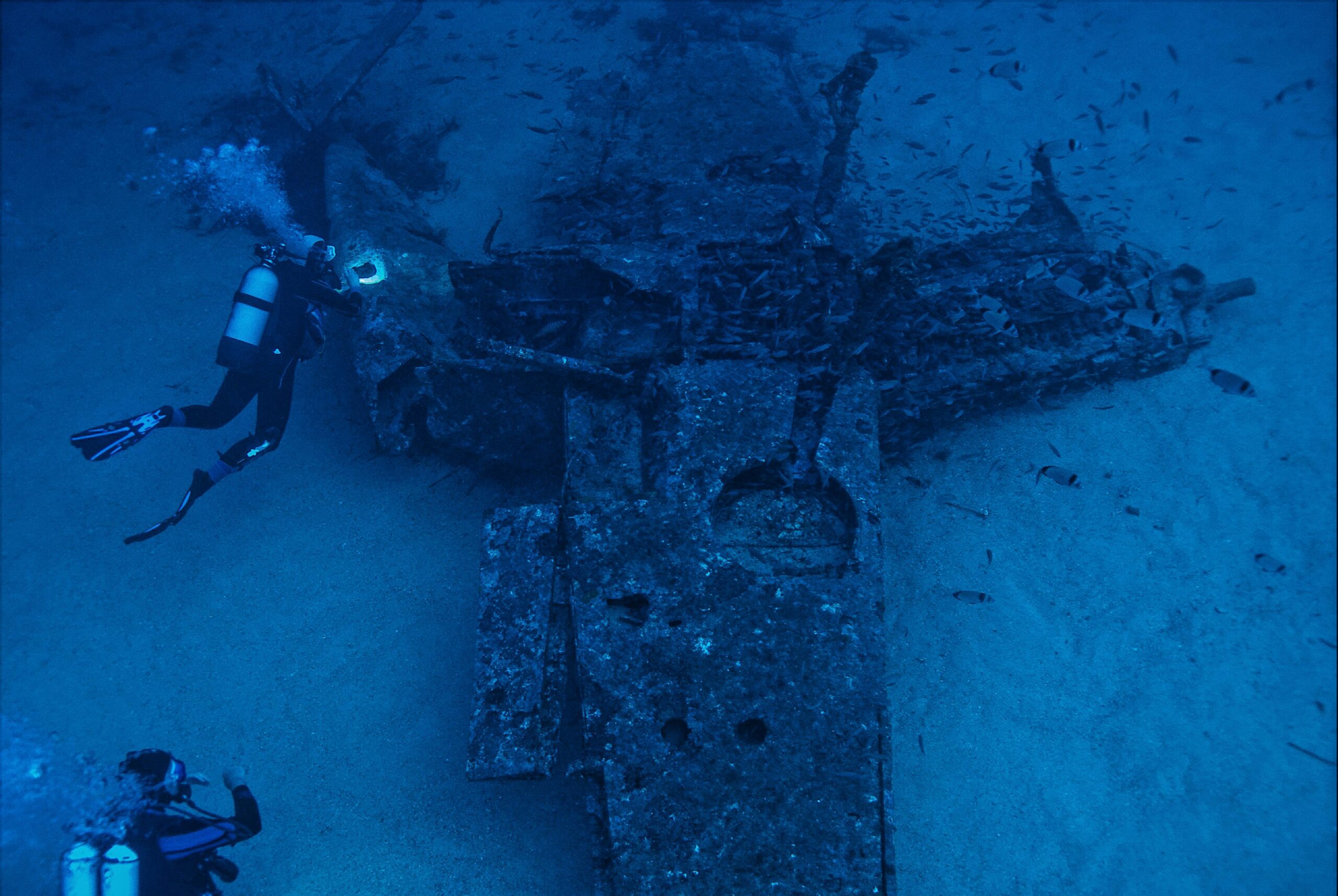
Underwater archaeologists have discovered that ROVs provide unprecedented access to shipwrecks and submerged historical sites. Delicate manipulator arms can carefully excavate artifacts while preserving their context, and photogrammetry systems create detailed three-dimensional models of entire wreck sites. This non-invasive documentation preserves cultural heritage digitally even as physical sites deteriorate.
Famous discoveries aided by ROV technology include ancient Mediterranean trading vessels, World War II submarine wrecks, and pre-Columbian settlements submerged by rising sea levels. The combination of precision control and high-resolution imaging allows archaeologists to study these sites with minimal disturbance.
Technological Innovations Pushing the Boundaries Further 🚀
The ROV industry continues evolving rapidly, with several breakthrough technologies poised to revolutionize underwater exploration even further in the coming years.
Artificial Intelligence and Autonomous Navigation
Machine learning algorithms are transforming ROV capabilities by enabling increasingly autonomous operation. Advanced computer vision systems can identify and track specific marine species, detect structural anomalies in infrastructure, and navigate complex underwater environments with minimal human intervention. These AI-driven systems process vast amounts of sensor data in real-time, alerting operators to significant findings and optimizing mission efficiency.
Neural networks trained on millions of underwater images can now distinguish between geological formations, biological organisms, and human-made objects with remarkable accuracy. This capability dramatically reduces the time required to analyze footage from exploratory missions and helps prioritize areas for detailed investigation.
Advanced Sensor Integration
Modern ROVs increasingly incorporate multi-spectral imaging systems that capture data across visible, infrared, and ultraviolet wavelengths. This expanded visual range reveals details invisible to conventional cameras, including fluorescent biological markers and thermal signatures from geological activity.
Acoustic sensors have similarly advanced, with synthetic aperture sonar creating photographic-quality images of the seafloor in complete darkness or murky water. These systems can detect objects buried beneath sediment and map vast areas rapidly, providing context for targeted ROV investigations.
Miniaturization and Micro-ROVs
While large work-class ROVs remain essential for heavy-duty tasks, the development of compact micro-ROVs has opened new exploration frontiers. These portable systems, some small enough to carry in a backpack, enable researchers and inspectors to access previously unreachable locations including flooded caves, narrow crevices, and the internal passages of shipwrecks.
Despite their small size, modern micro-ROVs incorporate surprisingly sophisticated capabilities including HD video, LED illumination, and depth ratings exceeding 300 meters. Their affordability has democratized underwater exploration, bringing ROV technology within reach of university research programs, environmental monitoring agencies, and even citizen scientists.
Environmental Monitoring and Conservation Efforts 🌍
Climate change and human activities continue threatening marine ecosystems worldwide, making comprehensive environmental monitoring more critical than ever. ROVs have become indispensable tools for tracking these changes and guiding conservation strategies.
Coral reef monitoring programs deploy ROVs to assess bleaching events, measure recovery rates, and identify areas requiring intervention. The ability to return to exact locations using GPS-guided navigation enables precise before-and-after comparisons that quantify environmental changes with scientific rigor.
Pollution tracking represents another crucial application. ROVs equipped with water quality sensors can trace contamination plumes to their sources, document illegal dumping, and assess the effectiveness of remediation efforts. Video documentation provides compelling evidence for enforcement actions while raising public awareness about marine pollution impacts.
Challenges and Limitations Still Facing the Technology
Despite remarkable advances, ROV technology still confronts significant challenges that researchers and engineers continue working to overcome.
Communication Constraints
While tethers provide reliable communication, they limit operational range and can become entangled in complex underwater structures. Radio waves and conventional wireless signals cannot penetrate seawater effectively, restricting truly autonomous operation. Acoustic communication offers an alternative but provides limited bandwidth unsuitable for high-definition video transmission.
Power Limitations and Mission Duration
Battery technology remains a limiting factor for untethered operations. Current energy storage systems cannot match the endurance provided by tethered power supplies, restricting autonomous missions to relatively short durations. This limitation particularly affects deep-ocean exploration where travel time to the work site may consume a substantial portion of available power.
Cost and Accessibility
Professional-grade ROVs capable of deep-water operation remain expensive, with work-class systems costing hundreds of thousands to millions of dollars. This investment barrier limits access primarily to well-funded research institutions, government agencies, and large commercial enterprises. While micro-ROV prices have decreased substantially, these smaller systems cannot match the capabilities of their larger counterparts.
The Future Horizon of Underwater Exploration 🔮
Looking forward, several emerging trends promise to expand ROV capabilities and applications even further in the coming decades.
Swarm Robotics and Collaborative Systems
Researchers are developing coordinated ROV swarms that work together to accomplish complex tasks. Multiple smaller vehicles operating in concert could map large areas rapidly, maintain persistent observation of dynamic phenomena, or collectively transport objects beyond individual capacity. Distributed sensor networks combining fixed monitoring stations with mobile ROVs would provide comprehensive environmental coverage impossible with current systems.
Bio-Inspired Designs
Engineers increasingly look to marine organisms for design inspiration. Biomimetic ROVs incorporating flexible bodies, efficient propulsion mechanisms, and adaptive sensing systems based on fish and cephalopod anatomy may achieve superior performance compared to conventional rigid designs. These nature-inspired vehicles could navigate complex environments more efficiently while reducing energy consumption.
Extended Human Presence
While ROVs eliminate many risks associated with human diving, telepresence technologies are working to preserve the cognitive advantages human observers provide. Advanced virtual reality systems allow operators to experience underwater environments immersively, improving spatial awareness and decision-making. Haptic feedback systems that transmit touch sensations from manipulator arms to operators create intuitive control interfaces approaching the dexterity of direct human manipulation.
Transforming Our Relationship with the Ocean Depths
The proliferation of advanced ROV technology is fundamentally changing how humanity interacts with underwater environments. What once seemed impossibly remote and alien has become accessible, studied, and increasingly understood through these remarkable machines.
This technological revolution carries profound implications extending beyond scientific discovery. Better understanding of ocean processes informs climate models, enhances weather prediction, and guides sustainable resource management. Documentation of underwater ecosystems builds public appreciation for marine conservation while providing the data necessary to protect threatened species and habitats.
Commercial applications continue expanding as ROV capabilities improve and costs decrease. Aquaculture operations use ROVs to monitor fish health and inspect net infrastructure. Underwater construction projects employ them for site surveys and quality control. Search and recovery operations benefit from rapid deployment capabilities and the ability to work in hazardous conditions.
The democratization of ROV technology through increasingly affordable systems has particularly significant implications. Coastal communities can monitor their local marine environments directly rather than depending entirely on distant experts. Educational institutions incorporate hands-on ROV operation into marine science curricula, inspiring the next generation of ocean researchers and engineers.
Pioneering Tomorrow’s Ocean Discoveries Today
As remotely operated vehicle technology continues its rapid evolution, we stand at the threshold of an unprecedented era of underwater discovery. The combination of artificial intelligence, advanced sensors, improved materials, and innovative designs promises capabilities that would have seemed like science fiction just decades ago.
These machines have already revealed wonders hidden in the ocean depths—from bizarre deep-sea creatures to geological processes shaping our planet, from ancient shipwrecks preserving human history to resources that may help address future challenges. Each advance in ROV technology expands the boundaries of possible exploration, bringing previously inaccessible regions within humanity’s reach.
The oceans cover more than 70% of Earth’s surface yet remain largely unexplored. Remotely operated vehicles are changing that reality, transforming the deep sea from an impenetrable mystery into an investigable frontier. As these technologies mature and proliferate, they will undoubtedly continue revealing discoveries that reshape our understanding of our planet, its history, and the remarkable diversity of life it supports. The revolution in underwater exploration has only just begun. 🌊✨

Toni Santos is a maritime researcher and underwater archaeologist specializing in the study of submerged heritage, ancient port systems, and the cultural landscapes preserved beneath the sea. Through an interdisciplinary and immersive approach, Toni investigates how humanity has left traces of knowledge, commerce, and legend in the underwater world — across oceans, myths, and sunken cities.
His work is grounded in a fascination with wrecks not only as artifacts, but as carriers of hidden meaning. From historic shipwreck discoveries to mythical harbors and lost coastal settlements, Toni uncovers the physical and cultural evidence through which civilizations preserved their relationship with the maritime unknown.
With a background in marine archaeology and underwater survey methods, Toni blends technical analysis with archival research to reveal how oceans were used to shape identity, transmit memory, and encode sacred knowledge.
As the creative mind behind revaltro, Toni curates documented dive studies, speculative harbor maps, and archaeological interpretations that revive the deep cultural ties between water, folklore, and forgotten science.
His work is a tribute to:
The submerged heritage of Historic Shipwrecks and Their Cargoes
The legendary sites of Mythical Harbors and Lost Civilizations
The technical methods of Underwater Exploration Techniques
The natural archiving power of Preservation in Salt and Sediment
Whether you’re a maritime historian, nautical researcher, or curious explorer of forgotten submerged worlds, Toni invites you to explore the hidden depths of oceanic heritage — one wreck, one harbor, one legend at a time.